

How allocation works
When a task reaches a swimlane with allocation rules configured, the system:- Identifies candidate users — either all users with execute permissions in that swimlane, or a specific list you define.
- Counts each candidate’s currently assigned tasks across all processes.
- Assigns the task to the user with the fewest assigned tasks (lowest workload).
- If two or more users have the same task count, one is selected randomly.
Allocation is based purely on task count. Task priority does not affect which user receives the task — it is a display and filtering field only.
Accessing allocation rules
To access the allocation rules, follow the next steps:- Open FlowX Designer.
- Go to your Application and from the side menu, under Task Management, select the Allocation rules entry.
Adding process and allocation rules
To add process and allocation rules, follow the next steps:- Click Add process button, in the top-right corner.
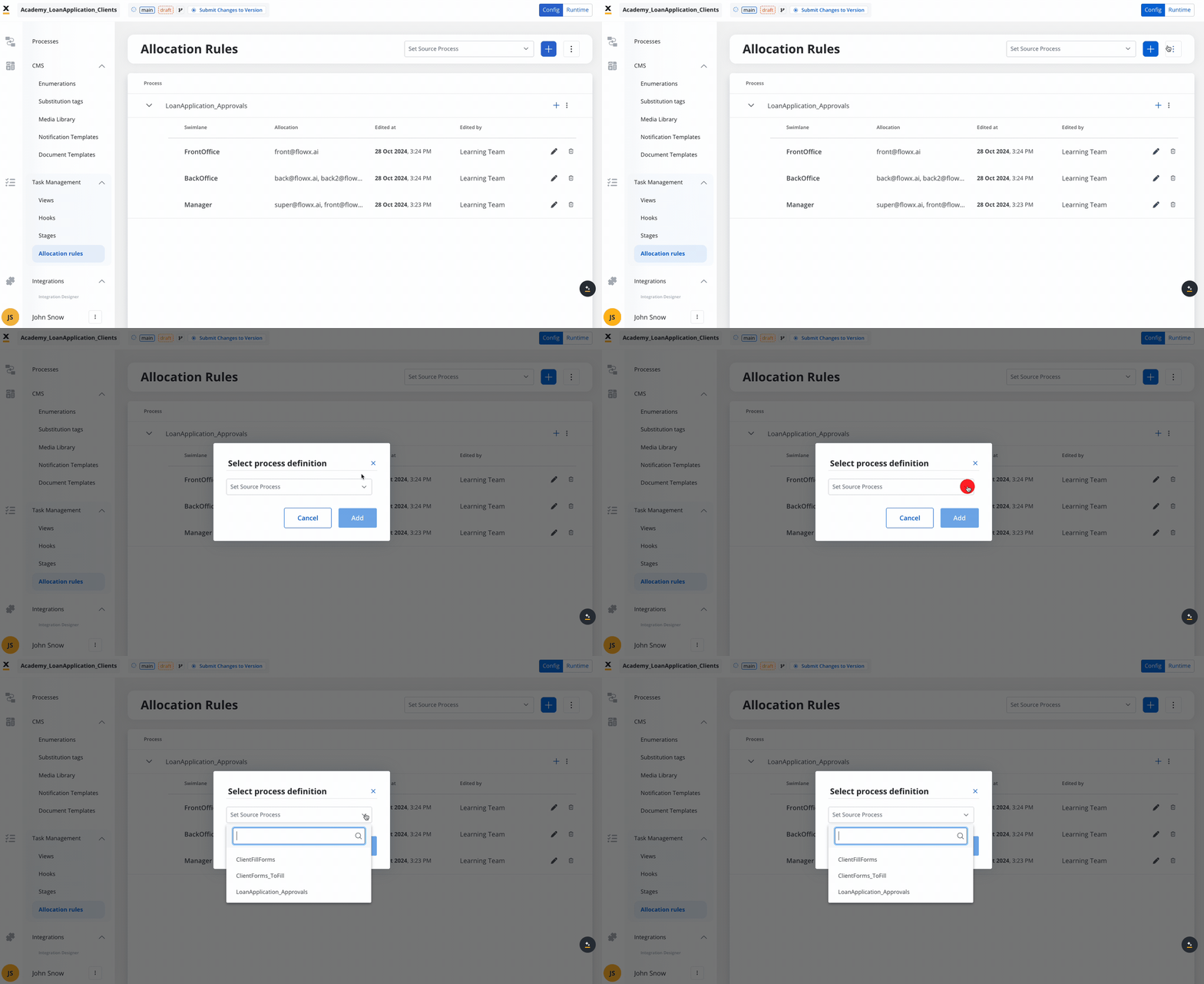
- Select a process definition from the drop-down list.
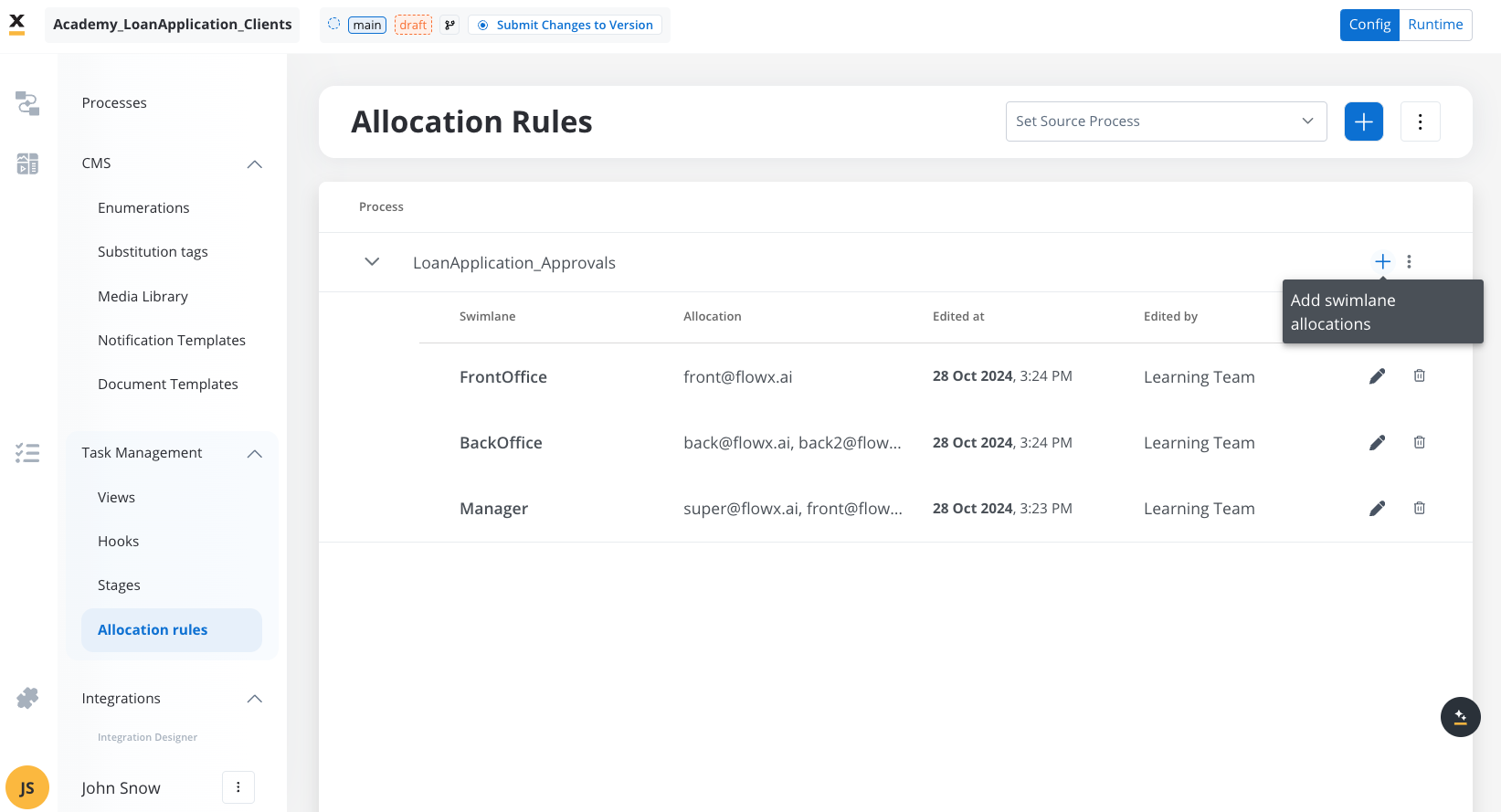
- Click Add swimlane allocations button (+) to add allocations.
If there are no users with execute rights in the swimlane you want to add (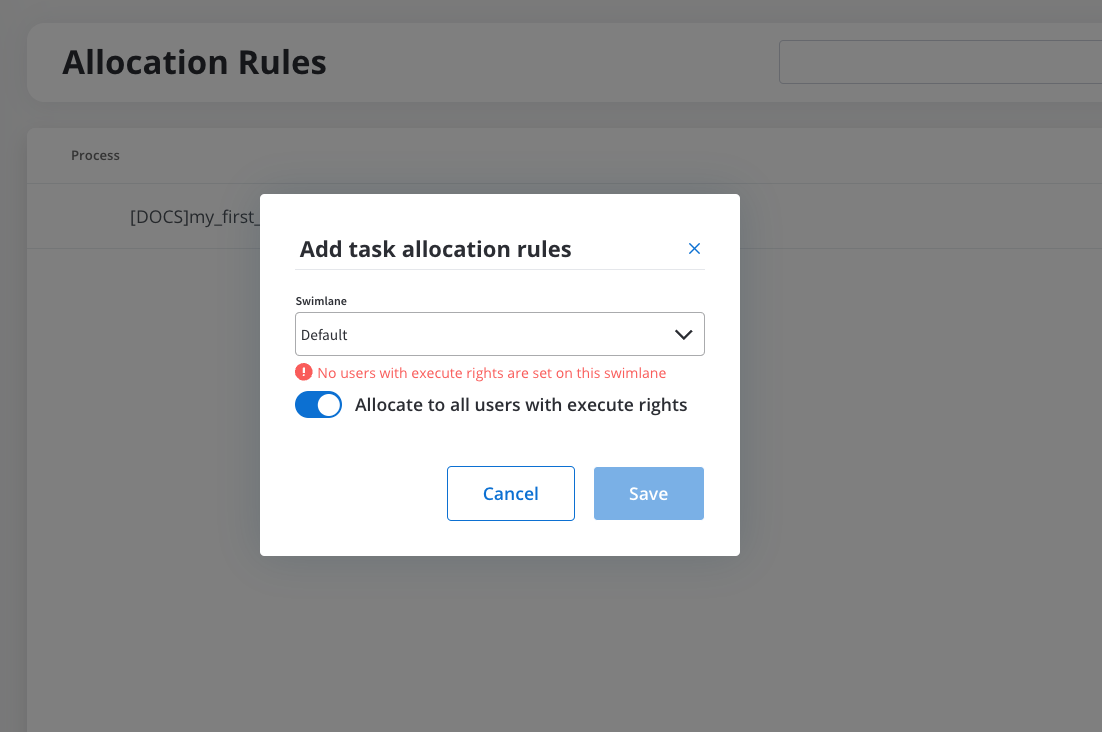
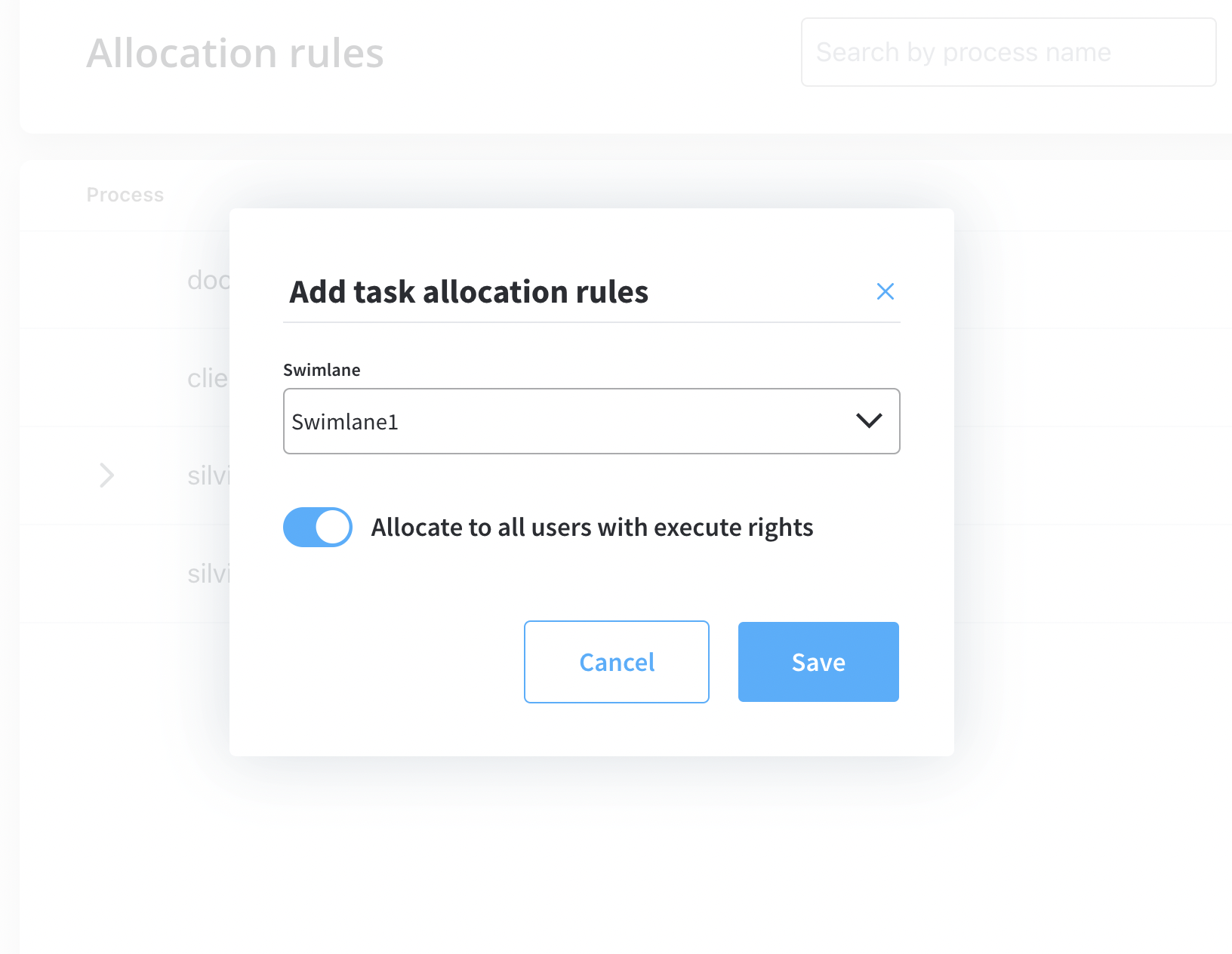
hasExecute: false), the following error message will be displayed:- Option 1: Allocate all users with
execute rights.
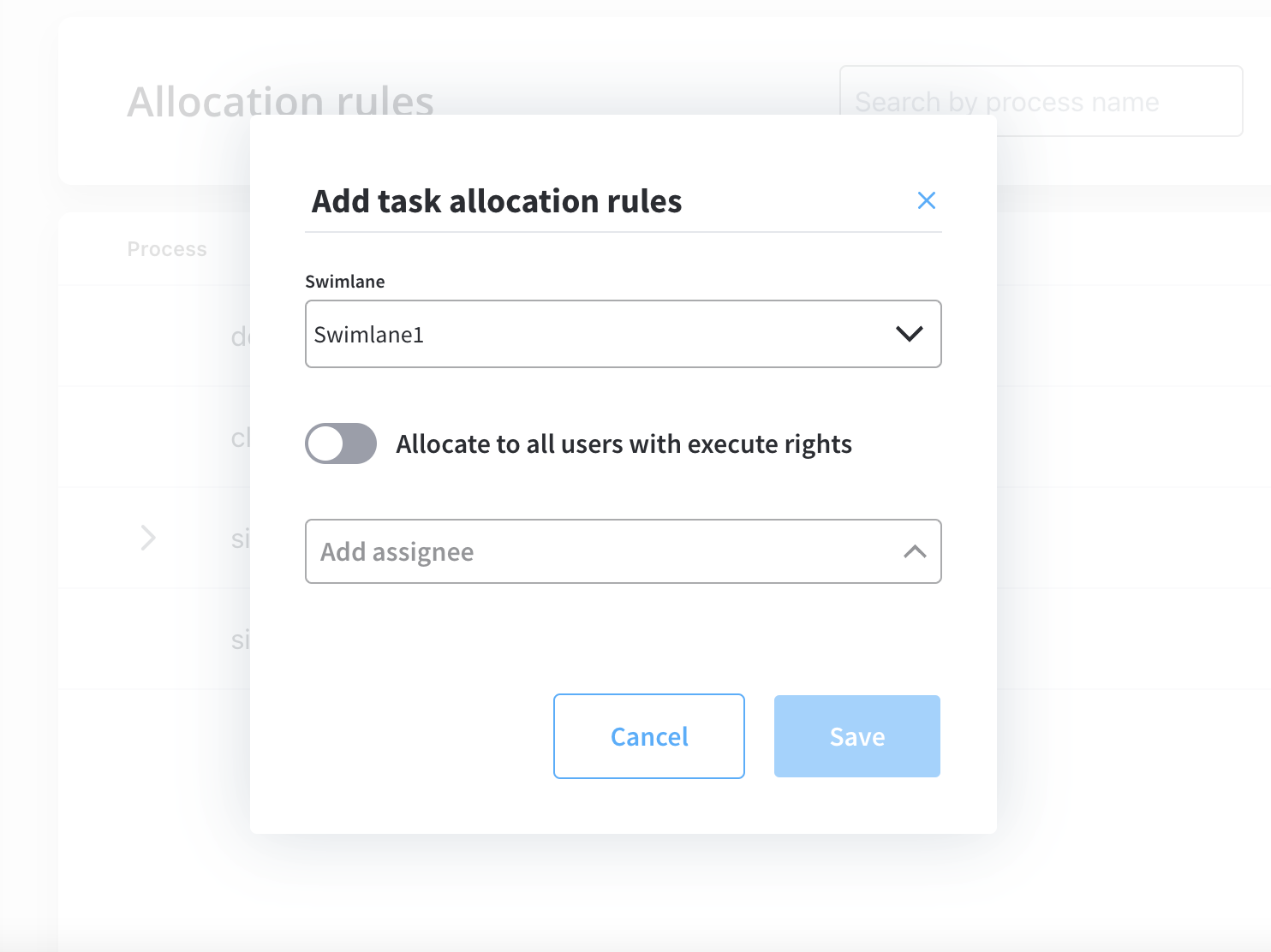
- Option 2: Allocate only users you choose from the drop-down list. You can use the search function to filter users by name.
- Click Save.
Users with out-of-office status are skipped by automatic allocation. For more information, see the out-of-office records documentation.
Editing allocation rules
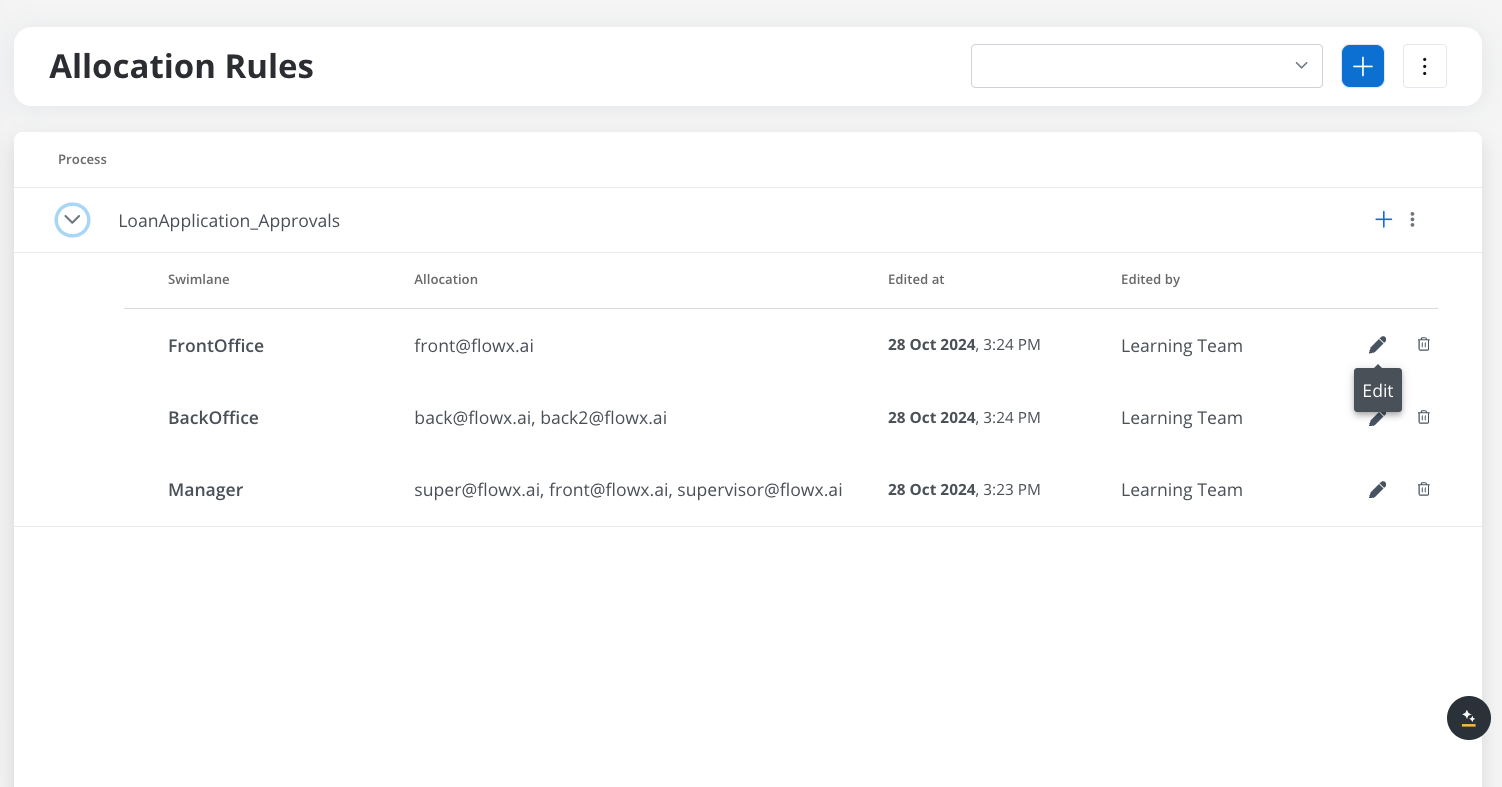
To edit allocation rules, follow the next steps:- Click Edit button.
- Change the allocation method.
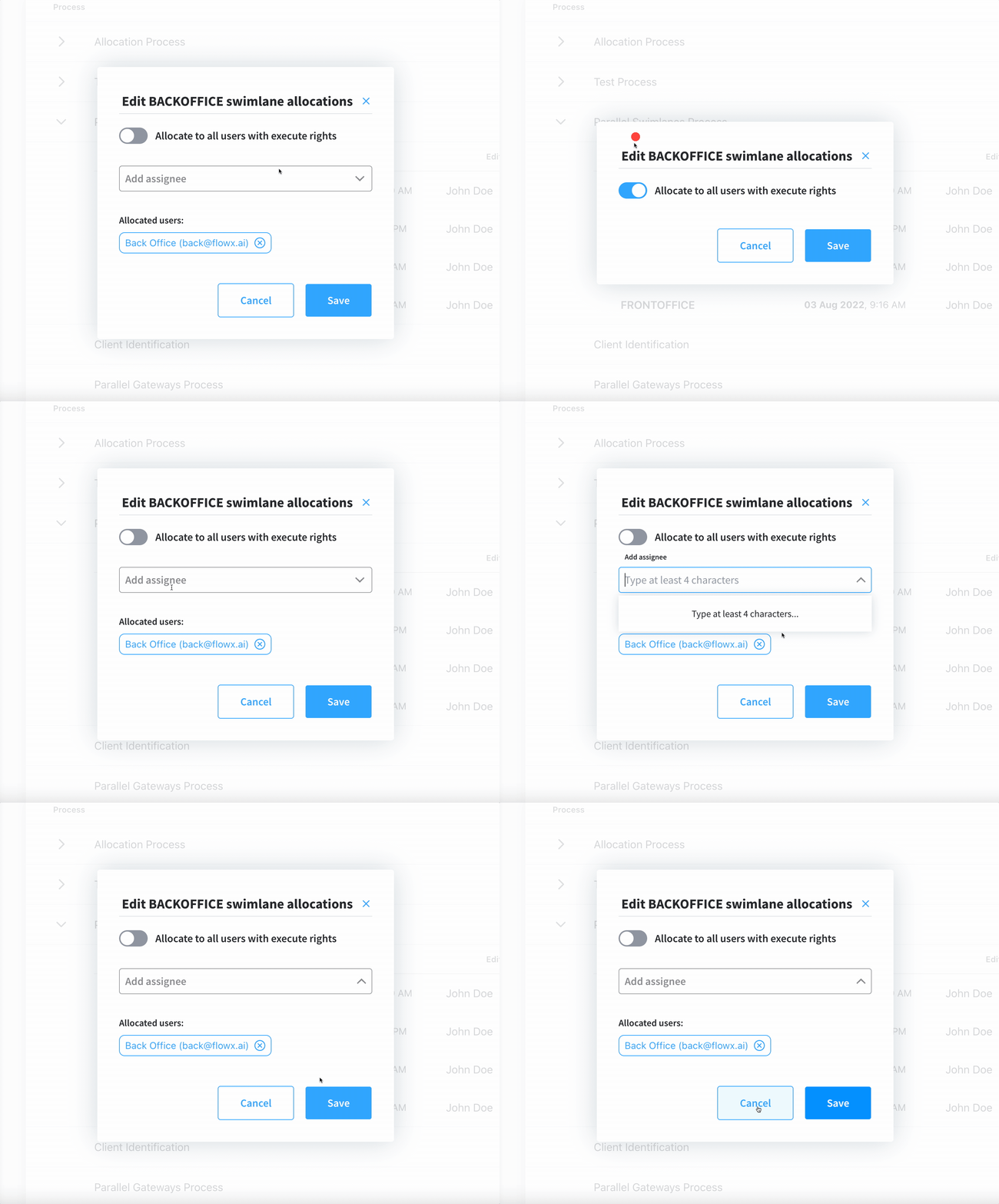
- Click Save.
Viewing allocation rules
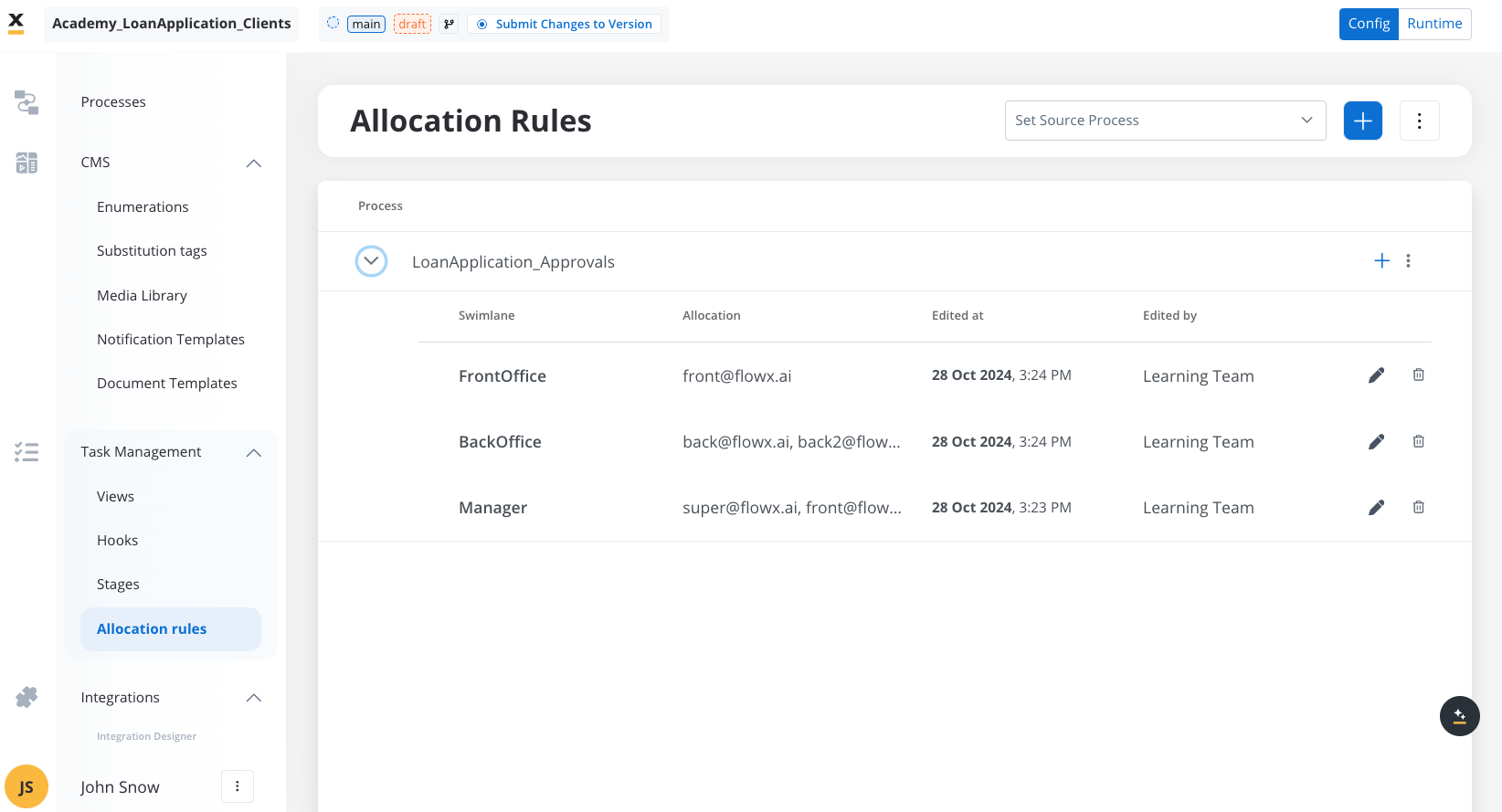
The allocation rules list displays all the configured swimlanes grouped by process:- Process - the process definition name where the swimlanes were configured
- Swimlane - the name of the swimlane
- Allocation - applied allocation rules
- Edited at - the last time when an allocation was edited
- Edited by - the user who edited/created the allocation rules
Exporting/importing process allocation rules
To copy process allocation rules and move them between different environments, you can use the export/import feature. You can export process allocation rules as JSON files directly from the allocation rules list: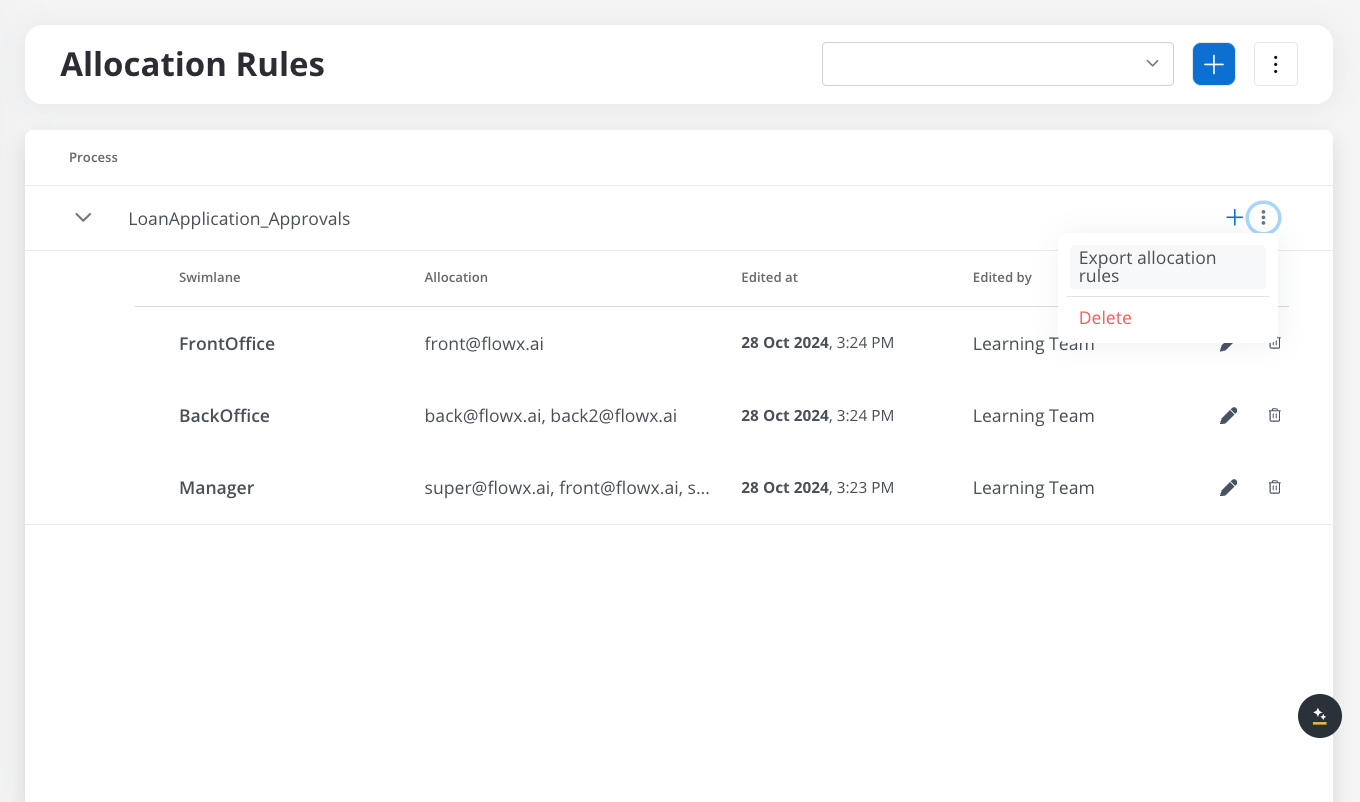
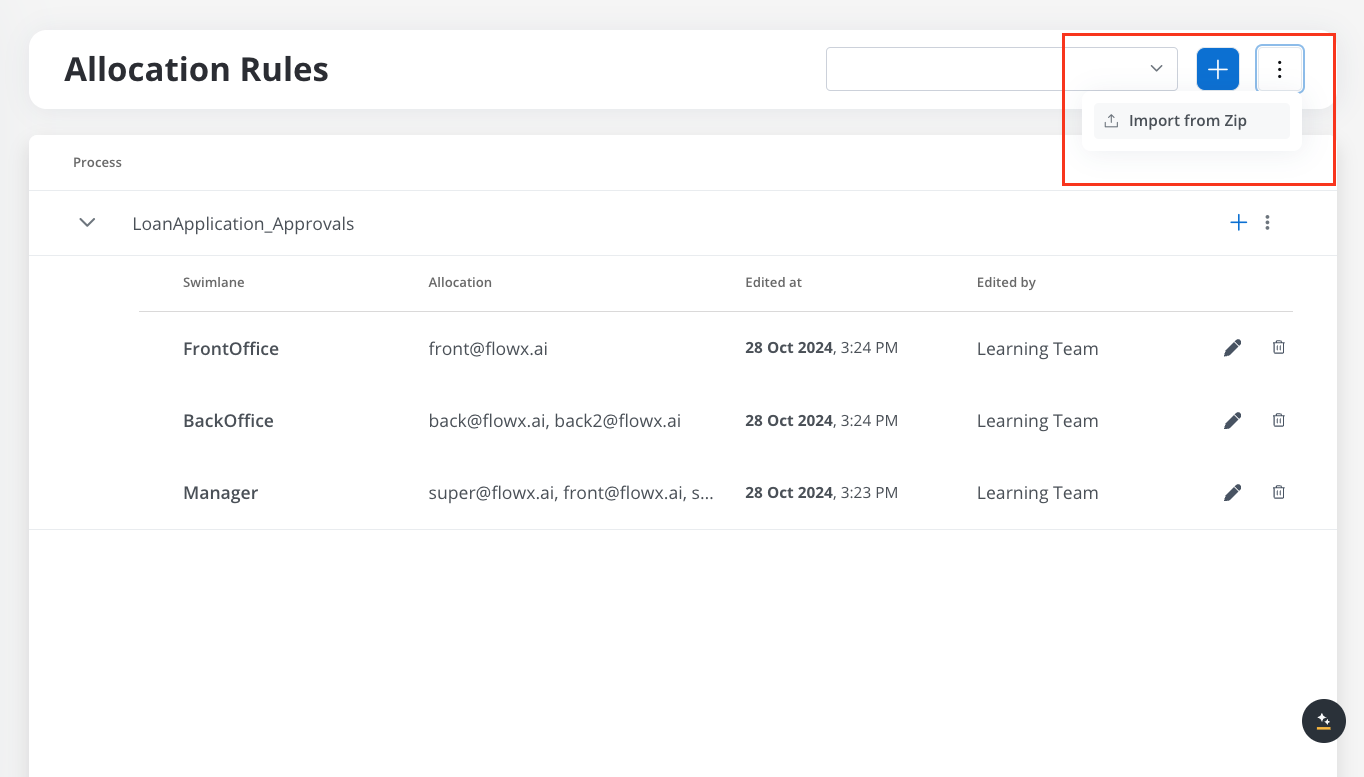
Related resources
Task Management Overview
Learn about Task Management features and configuration
Task Management Localization
Localize Task Management UI in 34+ languages
Out of Office Records
Manage user availability for task allocation