

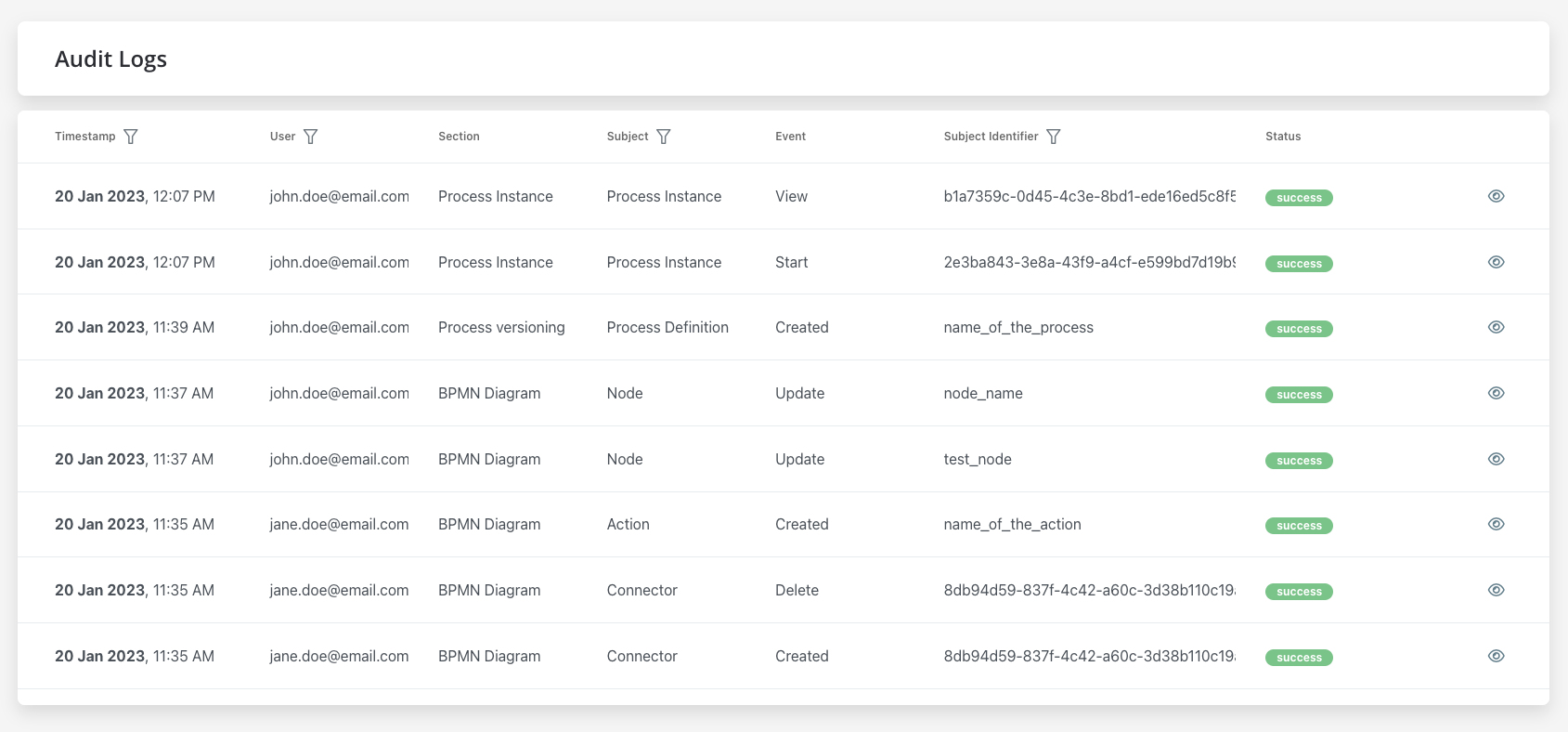
- Timestamp - the date and time the event occurred, the timestamp is displayed in a reversed chronologically order
- User - the entity who initiated the event, could be a username or a system
- Subject - the area or component of the system affected by the event
Possible values
Possible values
- Process Instance
- Process variables
- Token
- Task
- Exception
- Process definition
- Node
- Action
- UI Component
- General Settings
- Swimlane
- Swimlane Permissions
- Connector
- Enumeration
- Enumeration Value
- Substitution Tag
- Content Model
- Language
- Source System
- Image
- Font file
- Event - the specific action that occurred
Possible values
Possible values
- Create
- Update
- Update bulk
- Update state
- Edit
- Export
- Import
- Delete
- Clone
- Start
- Start with inherit
- Advance
- View
- Expire
- Message Send
- Message Receive
- Notification receive
- Run scheduled action
- Execute action
- Finish
- Dismiss
- Retry
- Abort
- Assign
- Unassign
- Hold
- Unhold
- Subject identifier - the name related to the subject, there are different types of identifiers based on the selected subject
- Version - the version of the process definition at the time of the event
- Status - the outcome of the event (e.g. success or failure)
Filtering
You can filter audit records by event date and by selecting specific options for User, Subject, and Subject Identifier.- Filter by event date
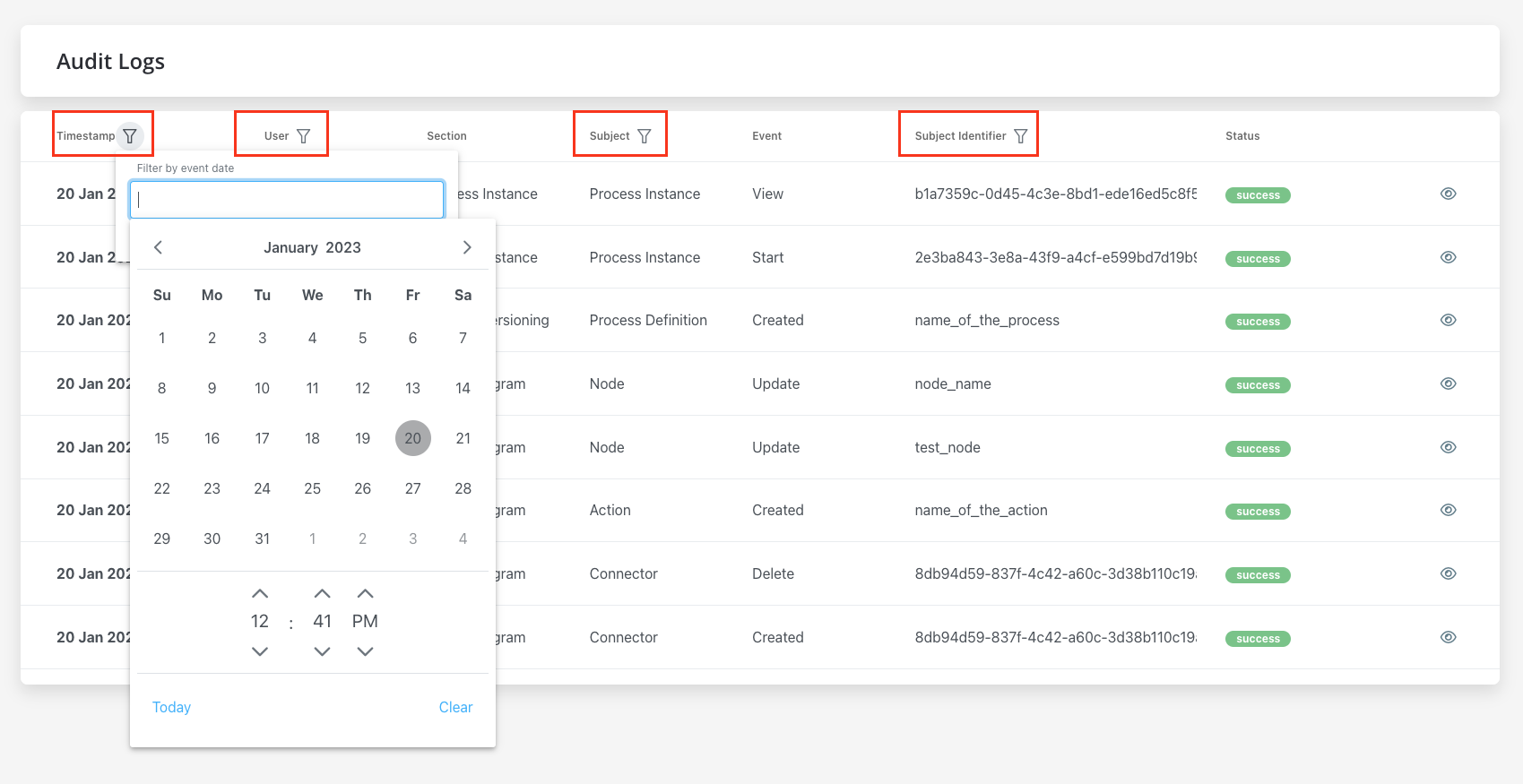
- User - single selection, type at least 4 characters
- Subject - single selection
- Subject identifier - exact match
The audit trail captures everything by design: every change is recorded and persisted whether it was performed by a person, a system actor, or a service account, and no setting excludes events at capture time — completeness is what makes it an audit trail. Filtering happens only when reading the log. The User filter is a positive selection — you pick one author to view, so narrowing to human users means selecting them, not excluding system actors.
Audit log details
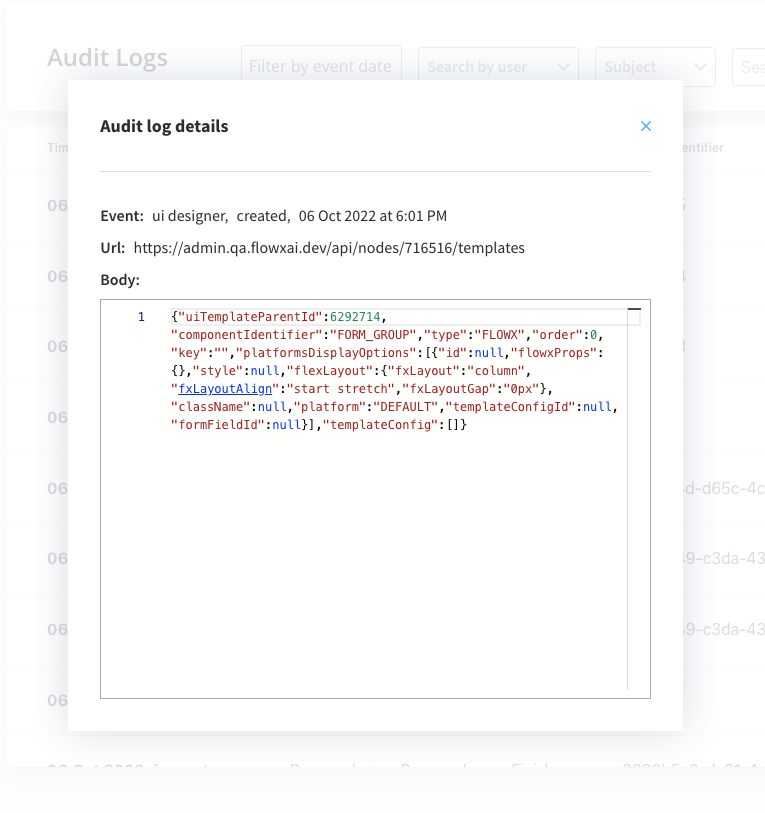
To view additional details for a specific event, click the eye icon on the right of the event in the list. Additional information available in the audit log details window includes Here you have the following information:- Event - the specific action that occured
- URL - the URL associated with the event
- Body - any additional data or information related to the event
Audit setup
More details on how to deploy Audit microservice