What is an Identity Provider (IdP)?
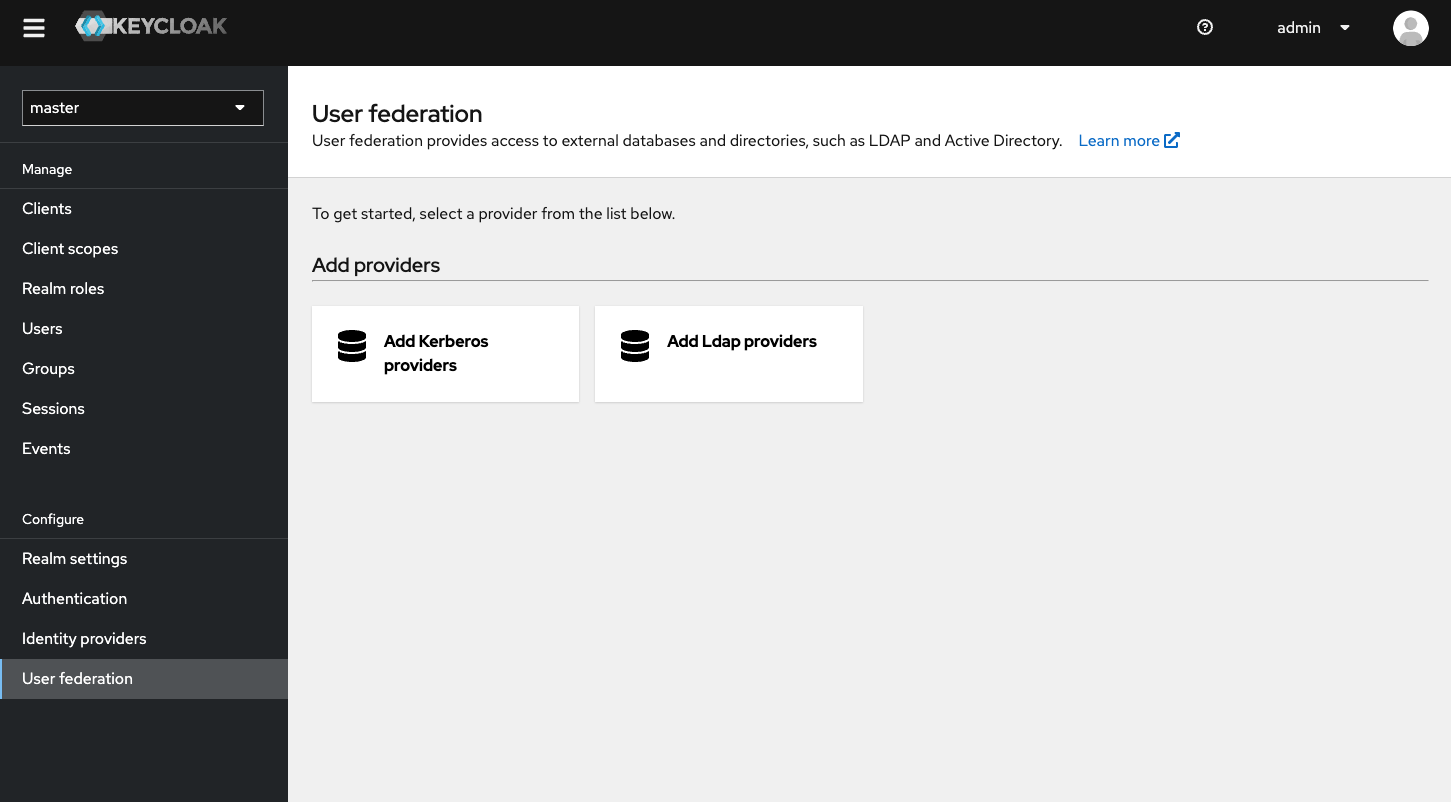
The IdP, Identity-as-a-Service (IDaaS), Privileged Identity/Access Management (PIM/PAM), Multi-factor/Two-factor Authentication (MFA/2FA), and numerous other subcategories are included in the IAM category. IdP is a subset of an IAM solution that is dedicated to handling fundamental user IDs. The IdP serves as the authoritative source for defining and confirming user identities. The IdP can be considered maybe the most important subcategory of the IAM field because it often lays the foundation of an organization’s overall identity management infrastructure. In fact, other IAM categories and solutions, such as IDaaS, PIM/PAM, MFA/2FA, and others are often layered on top of the core IdP and serve to federate core user identities from the IdP to various endpoints. Therefore, your choice in IdP will have a profound influence on your overall IAM architecture.We recommend Keycloak, a component that allows you to create users and store credentials.Every communication that comes from a consumer application, goes through a public entry point (API Gateway). To communicate with this component, the consumer application tries to start a process and the public entry point will check for authentication (Keycloak will send you a token) and the entry point validates it.
Authorization split (5.8.0+): Keycloak is authoritative for authentication, user attributes (used by business filters), and federation with external IDPs. End-user roles, end-user groups, and project-scoped role assignment are managed in FlowX. See Runtime authorization.Up to 5.7.0, end-user groups were also managed in Keycloak.
For more information on how to add roles and how to configure an IdP solution, check the following section:
Configuring an IAM solution
Roles and Keycloak entities reference
Use this section as a quick reference for the named roles, service accounts, and Keycloak realms you will encounter across the FlowX setup guides. Each entry links out to the full configuration page.End-user roles
Backend service accounts
These are Keycloak clients used by FlowX backend services to authenticate against the platform. They live in the service-accounts realm (00000002-0002-4002-8002-000000000002) and are shared across the installation.
For the full list and the role assignments each one needs, see Adding service accounts.
Keycloak realms
End-user roles and groups are no longer modeled as Keycloak roles or groups starting with 5.8.0. If you are searching for a FlowX role name that is not listed in this quick reference, it is most likely either an end-user role configured in your own FlowX project (see Runtime authorization) or a Keycloak group that was created in your local deployment for token-mapping purposes.
Using Keycloak with an external IdP
Recommended Keycloak version: 26.x
AD or LDAP provider
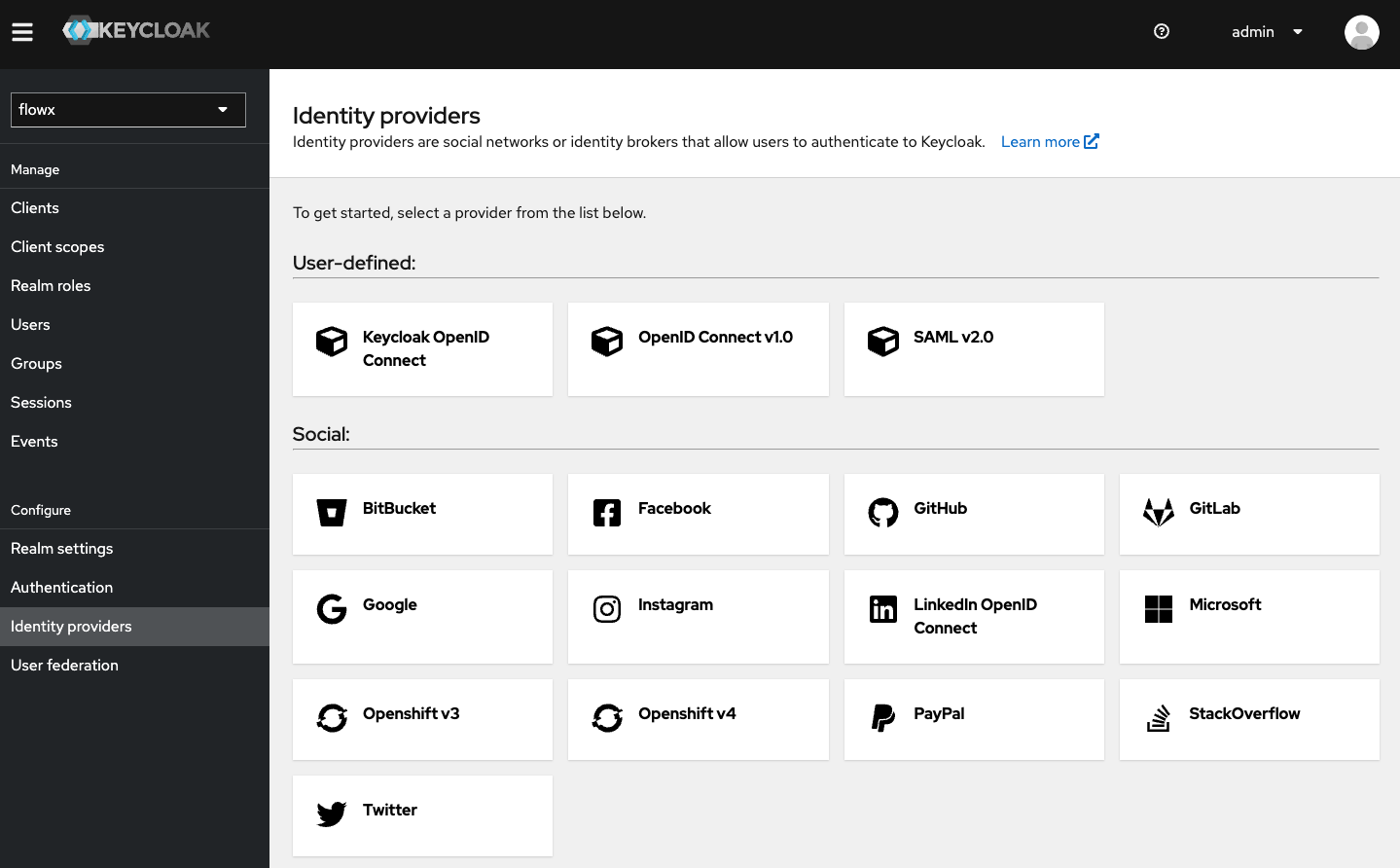
In Lightweight Directory Access Protocol (LDAP) and Active Directory, Keycloak functionality is called federation or external storage. Keycloak includes an LDAP/AD provider.