Message events serve as a means to incorporate messaging capabilities into business process modeling. These events are specifically designed to capture the interaction between different process participants by referencing messages.
By leveraging message events, processes can pause their execution until the expected messages are received, enabling effective coordination and communication between various system components.
A Message Intermediate Event serves to send or receive messages. A filled marker denotes a “throw” event, while an unfilled marker indicates a “catch” event. This either advances the process or alters the flow for exception handling. Identifying the Participant is done by connecting the Event to a Participant through a Message Flow.
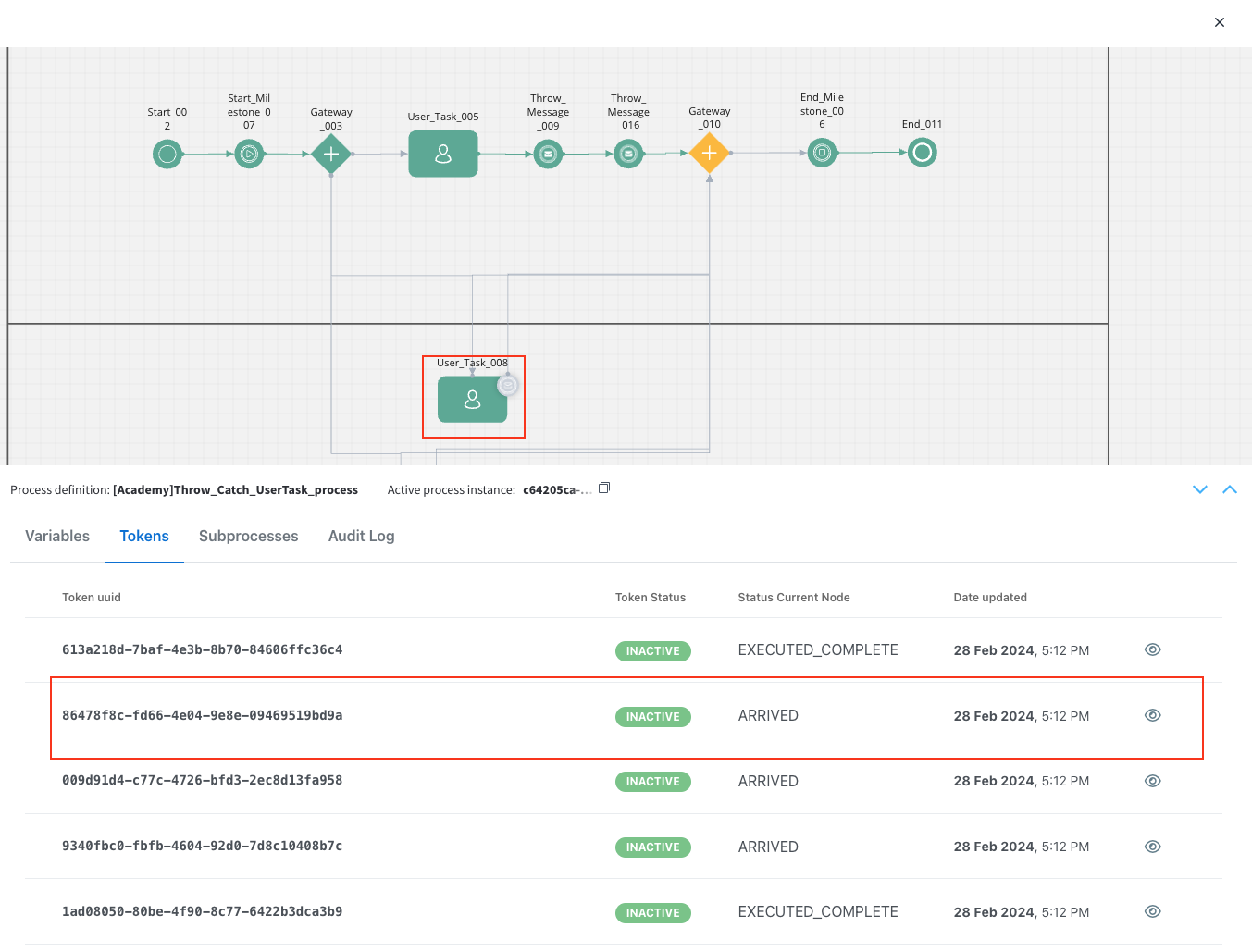
Boundary Events involve handling by first consuming the event occurrence. Message Catch Boundary Events, triggered by incoming messages, can be configured as either interrupting or non-interrupting.
Trigger
Description
Marker
Message
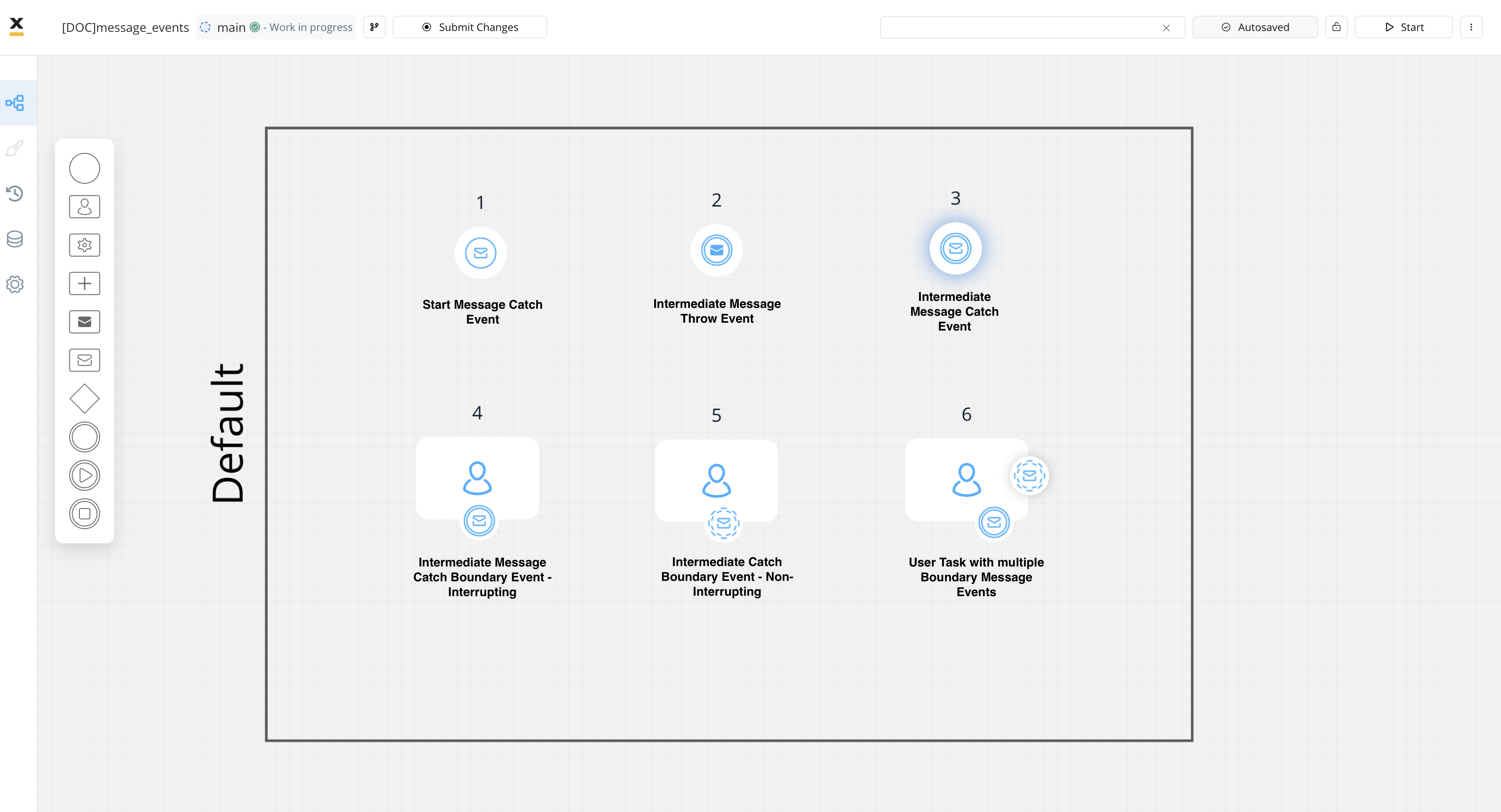
Non-interrupting Message Catch Event: The event can be triggered at any time while the associated task is being performed.
Non-interrupting
Trigger
Description
Marker
Message
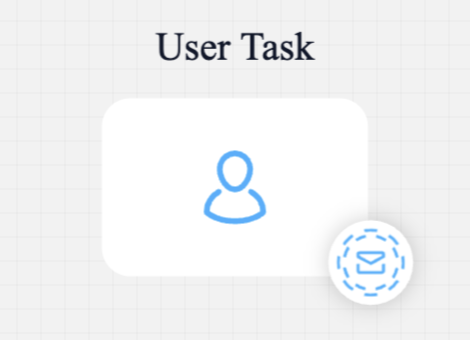
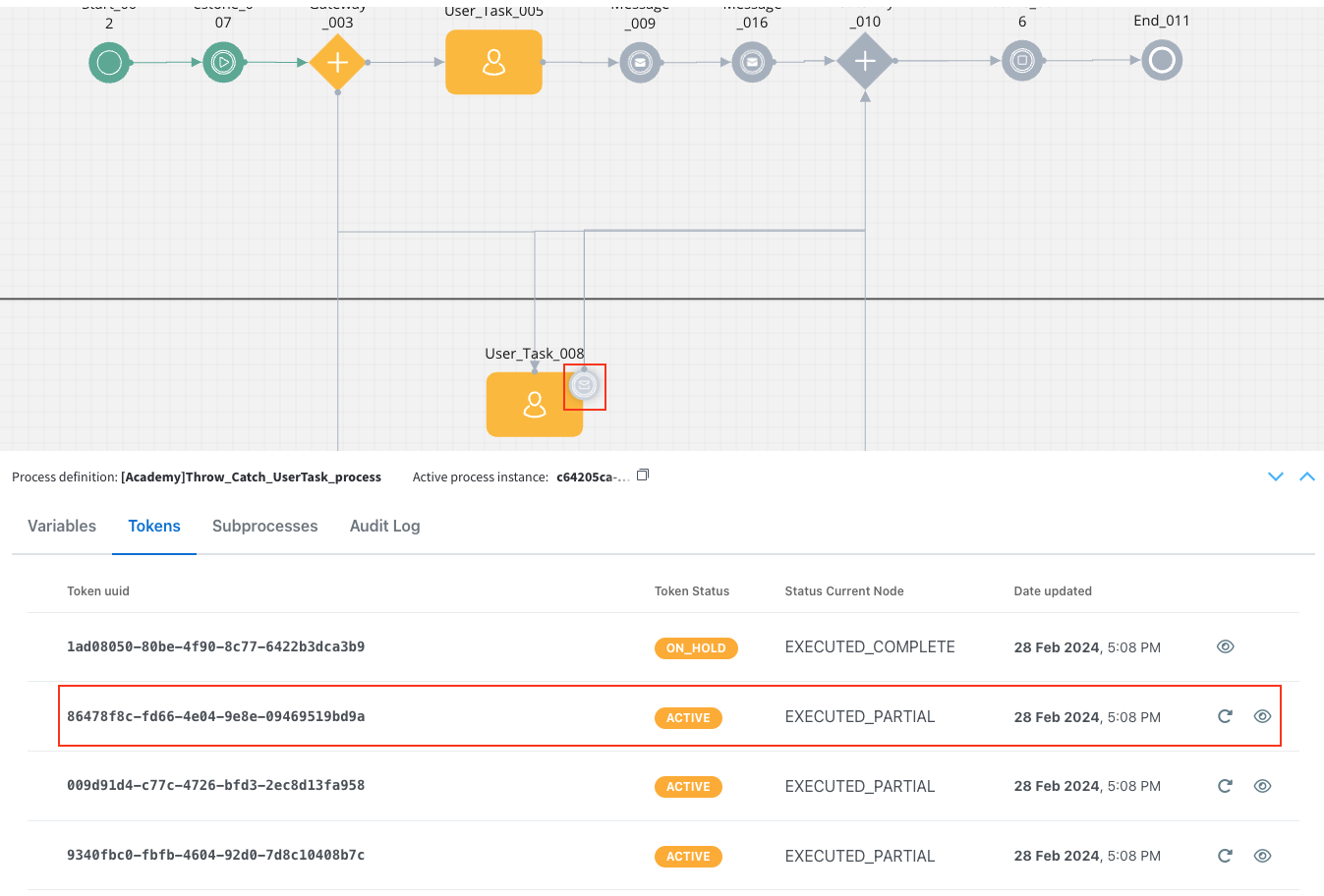
Interrupting Message Catch Event: The event can be triggered at any time while the associated task is being performed, interrupting the task.
Messages are not sent directly to process instances. Instead, message correlation is achieved through message subscriptions, which consist of the message name and the correlation key (also referred to as the correlation value).
A correlation key is a key that can have the same value across multiple instances, and it is used to match instances based on their shared value. It is not important what the attribute’s name is (even though we map based on this attribute), but rather the value itself when performing the matching between instances.For example, in an onboarding process for a user, you hold a unique personal identification number (SSN), and someone else needs a portion of your process, specifically the value of your input (SSN).
The communication works as follows: you receive a message on a Kafka topic - ${kafka.topic.naming.prefix}.core.message.event.process${kafka.topic.naming.suffix}. The engine listens here and writes the response.


 Catch
Catch 
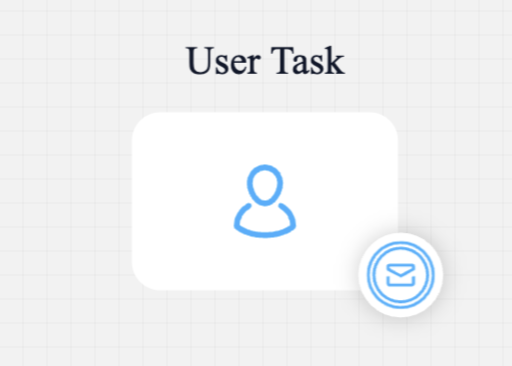
 Boundary Non-Interrupting Events